Characters
Character points, the nineteen basic archetypes, the seven advanced archetypes, ranks, and retainers.
The system at the end of the campaign
Eldritch ran on one long rulebook, the Player's Guide. This section records that system as it stood when the campaign ended in October 2026.
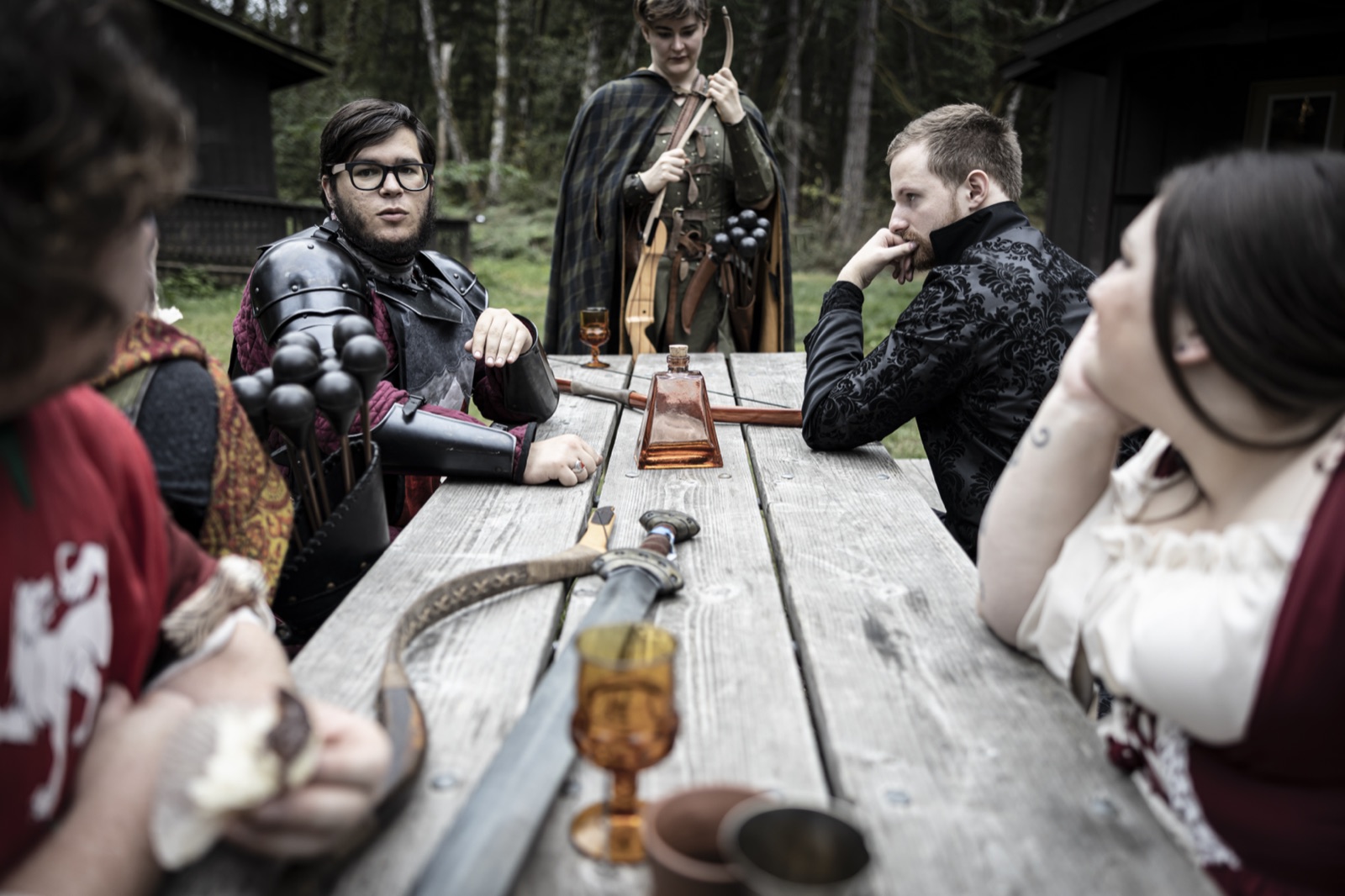
Eldritch was a game of players against the world, with conflict between players allowed only by consent.
Each character was built from an archetype and a set of skills bought with character points. Fights used foam weapons and a hit location system. Poisons, locks, armor, and goods existed as paper tags and cards. Four things served as money and leverage: coin, resources, Influence, and Espionage.
The rules were written down in the Player's Guide, and these pages follow its final edition.
Character points, the nineteen basic archetypes, the seven advanced archetypes, ranks, and retainers.
General and martial skills, with lore, espionage, Influence, medicine, armor, and refreshes.
The skill trees of Aurons, the Cirque, Knights, Magisters, Nobles, Veterans, and the Vigil.
Schematics, kits, crafting stations, resources, and gathering nodes.
Armor, hit locations, bleeding and death, melee, ranged weapons, and safety.
The calls and cards that put a character into a state, from Stun to Curse.
Settlement Events, Construction Projects, and Decisive Moments.
The Code of Conduct, the social contract, safety calls, and conflict between players.
Cabins, safe spaces, non-combatants, and the other accommodations.
Prose on these pages describes the game in the past tense. Skill tables keep the short commands of the rulebook, such as "Gain" and "May use," because that is how the entries read in play.