The Hearthlands
A protectorate of ArnesseHouse Blayne
The Hearthlands is the cradle of faith in Arnesse, a land of rolling plains, rivers, and great bounty. Its people revere the dawn, and corruption festers wherever that light does not reach.
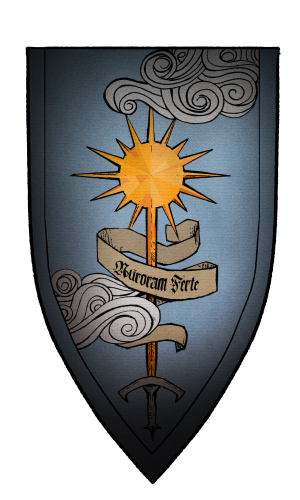
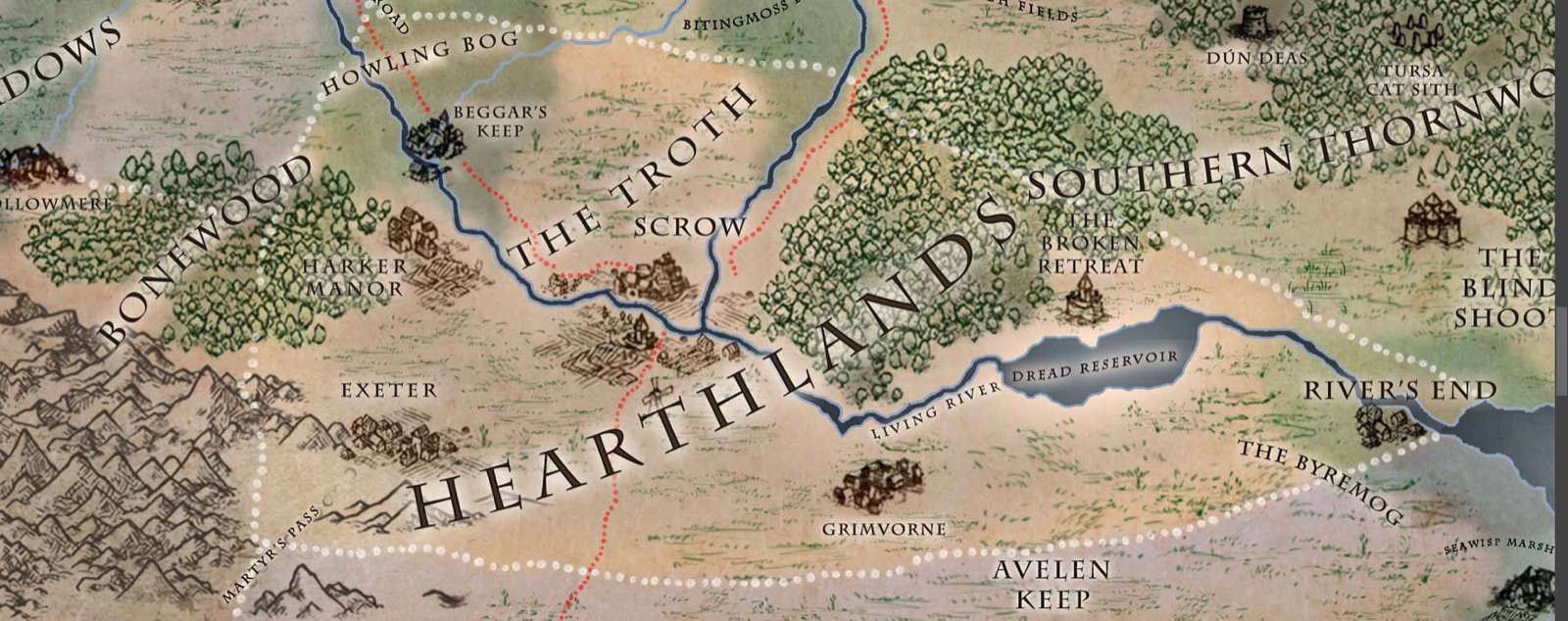
The Land and Its People
The old name of this land is the Troth. Alternating dry seasons and heavy rain give it fertile farmland on the high ground and marshy bog below, and its long summers allow crops for nearly the whole year.
This page describes the protectorate as it stood in 763, when the Annwyn appeared. The last section follows what became of its people there.
Most Hearthfolk live on remote homesteads and small settlements. They are known as hard-working and honest people, and many of them are serfs with little choice in where they labor. House Blayne holds more serfs than any other protectorate. Hearthfolk workers are hired out across Arnesse for construction, and the protectorate's farms feed a north that has gone hungry since the Shardmount erupted.
The people are largely poor and uneducated, and they are deeply wary of strangers. They hold whole districts to be cursed, under names such as the Howling Bog, the Bonewood, and the Dread Reservoir. Nearly everyone in the west follows the Aurorym, while roughly one in ten in the east has not converted.
The land is dangerous. Highwaymen work the roads, gangs hold parts of the towns, and bribes are close to a requirement for doing business. Many lords live well on that graft. Advancement for the lower castes lies almost entirely in the army or the priesthood, which is where most of the protectorate's unspent wealth goes. In 763 the sharpest question in the Hearthlands was how long the state could stand apart from a faith that kept gaining land, nobles, and gold.
The Troth and the Dawn
House Ulster ruled the Troth for centuries as a restless vassal of House Corveaux. The Troth had held more temples to the Old Gods than any other region, and their destruction left its people bitter. In the early seventh century, Magnus Blayne brought them a new faith, and it spread among them like fire.
King Richard II began arresting and executing the faithful in 606. His execution of Magnus Blayne in 609 opened the Dawn Crusade, in which the Ulsters and thousands of commonfolk fought the Crown and House Corveaux. Scrow was under siege by 611. Then an assassin killed the King, civil war drew the besieging army away, and King Roland Aragon lifted the ban on religion. Roland also raised the Ulsters to a great house. They took the name Blayne in honor of their martyr, and they became the eighth great house of the kingdom.
The new house ruled badly. Lord Paragon Theodric Blayne's Regnum was close to outright tyranny, and many Hearthfolk date the corruption of their land from those years. His cousin Emalia ended it with the Dawn Charter, which promised a trial before peers, a voice on taxes, freedom of belief, and the right to inherit. The charter was the most progressive measure in Arnesse, although it applied only to freemen, and the nobles decided who became one.
Under Lord Paragon Clovis Blayne and the Living Saints, towns such as Exeter became training grounds and forges, and the Vellatora took the field as a fighting force for the first time at the Battle of Lanton in 751. When Giles II won that battle, he married Aline, the daughter of Lord Frederick Blayne. The Troth was expanded with land taken from the Corveaux, Richter, and Innis, and the new protectorate was named the Hearthlands.
The High Houses
House Blayne of Scrow
Lord Paragon Frederick Blayne rules from the Revenant Keep, where the great Martyr's Throne stands above the two stewards' chairs. He has spent twenty years raising his house and has filled its coffers with tariffs, helped by a close alliance with the Cirque of Scrow. His wife Paloma, born a commoner and an artificer of the Cirque, still sews her own clothes and is beloved for it.
House Harker of Harker Manor
Two days' ride northwest of Scrow, the Harkers hold swamp and forest on the edge of the Howling Bog and the Bonewood. Simon and Rosia Harker are said to have freed the manor from an unhallowed creature two centuries ago, and the family has hunted monsters ever since.
House Botley of the Broken Retreat
The Kraken's Maw fleet shelled the Dread Keep for three days in the Great War, until the Serpentine Knights swam out by night and burned the ships. The keep was never rebuilt, and the Botleys still hunt pirates with a fleet called the Unbroken. Lord Frederick stripped them of their knightly status and disbanded their order when they passed to him, and few of those knights accepted his offer to swear anew.
House Blayne of Beggar's Keep
This cadet house is known across Arnesse for poor rule. Lord William Blayne, Warden of the Northpass, has tried to make something of his fetid swampland and has had little success.
The Cities
Scrow
Scrow stands on the Aurean Road, the Old Forest Road, and the Living River, so its people meet travelers from every land. It collects a fortune in tariffs from the caravans moving between north and south. The city has outgrown every plan made for it. Hired guards of the Cirque patrol the streets of Old Town in place of the Vellatora, which many take as a sign of how close House Blayne has grown to Carmilla, the local Ringmaster.
Exeter
The City of Shrines grew up around the Vellatora Chapterhouse and the Wardhall. Murals of the saints cover its walls, and nearly every doorway has a small shrine. It stands behind Casilda's Line, the fortifications that guard the road from the Sovereignlands. Every building requires the approval of the Castellan's office, which has made Exeter the most orderly city in the Hearthlands.
River's End
Twin statues a hundred feet tall once held a steel fence across the mouth of the Living River, a work called the Serpentine Gate. A Rourke fleet broke the western statue in the Great War. Ghost ships found on the river are still blamed on what came through the gap.
Customs and Faith
The veneration of saints fills much of the place that the gods once held. Hearthfolk take a patron saint when they are kindled into the faith, and most villages keep a shrine or two. The Martyrs of the Dawn include Saint Philip the Servitor, who organized the faith after Magnus died, Saint Cuthbert the Fearless, a knight sent to kill Magnus who joined him, and Saint Austra the Sanctified, who took the faith to the Dusklands. The Living Saints, among them Celestine the Eternal, Decima the Immaculate Aegis, and Casilda the Dawnbreaker, were held to be proof that the faith was true.
Commoners also tell of Saint Jamie the Redeemed, an oathbreaker who died defending a village from brigands and was pardoned by his mother, and of Saint Mary the Defiant, a child who warned a village of killers and died of her wounds. In the Aurorym, even the youngest can be a hero.
Society in the Hearthlands follows the Estates of the Realm, an old idea that gave each person a fixed place in a divine plan and defined the clergy as separate from the rulers. The full account of the faith is in Religion and Death.
In the Annwyn
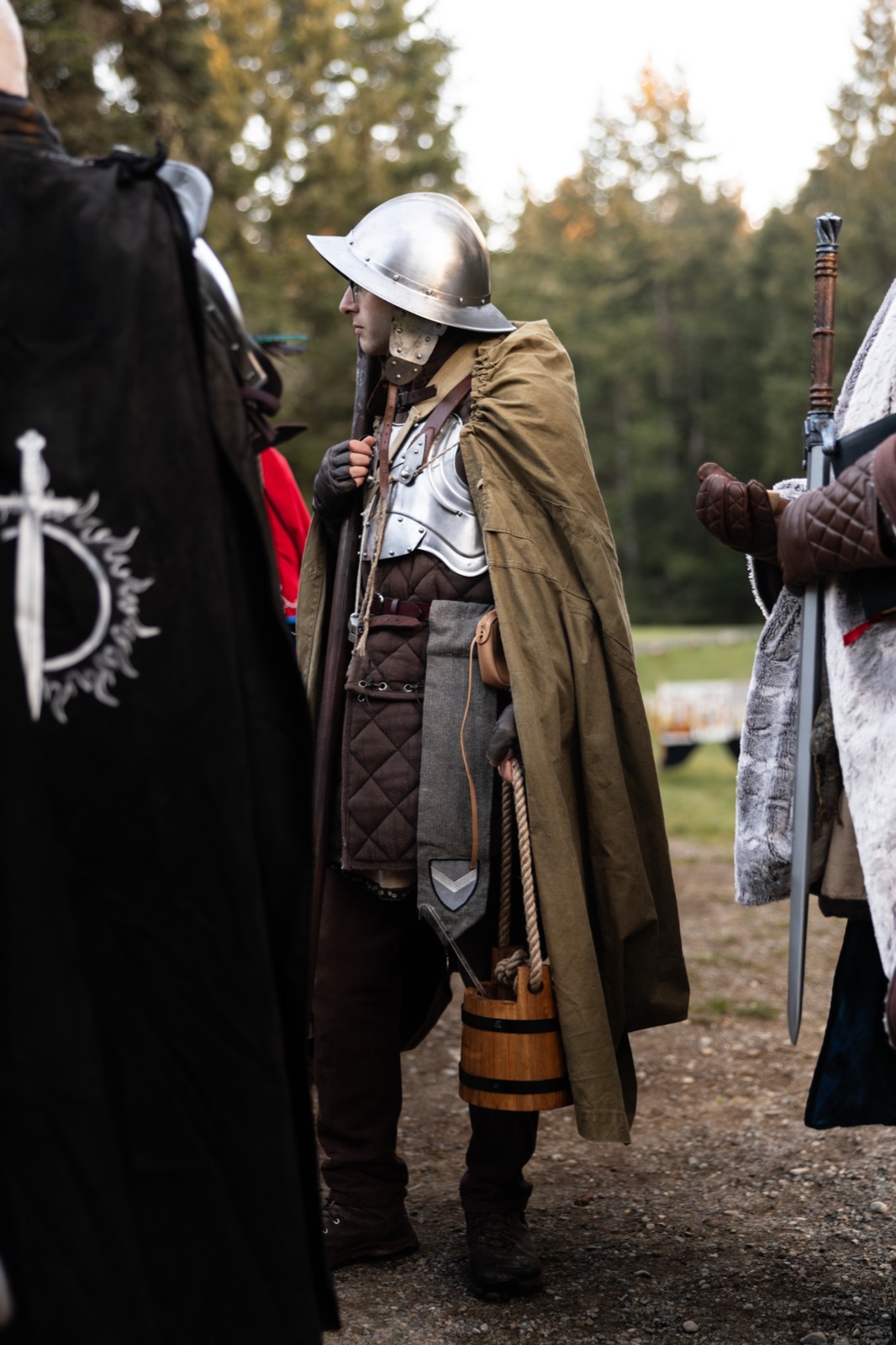
House Blayne and the Aurorym came to the Annwyn in the 3rd moon of 764, as a pilgrimage of Vellatora knights and aurons. They believed that the coming war against the darkness would be fought there, and the faithful gathered at Dawnhaven. Their winter was hard. Hungry and without leadership, some branded themselves with the mark of the Dawnson. By 765 many wondered why Lord Frederick had sent so little help, and rumor began to say that Magnus Blayne had been a fraud.
The Living Saints of the Dawn came looking for Saint Decima, and in 766 they died one by one. After the King's death, Lord Alion Cornwall and Matriarch Thea led the Dawnguard into Carran and rebuilt Stag Hall as Dawnbreaker, in honor of Saint Casilda. Dawnhaven starved through that summer and held together under Thea's council. In the winter that followed, the curate Cyrus proved to be Silas Laurent, who had turned the order against itself from within.
Dawnhaven fell to Oblivion in 767, and the Dawnguard died with Lord Alion. At the end, the sick of Mystvale lay on the steps of the Chantry. The Chronicle follows the faithful from Event II.