The Unraveling
Prologue to Event VII10th moon, 766
The prologue to Event VII told how King Giles II died in the Annwyn and how the realm broke apart under four banners by the 10th moon of 766.
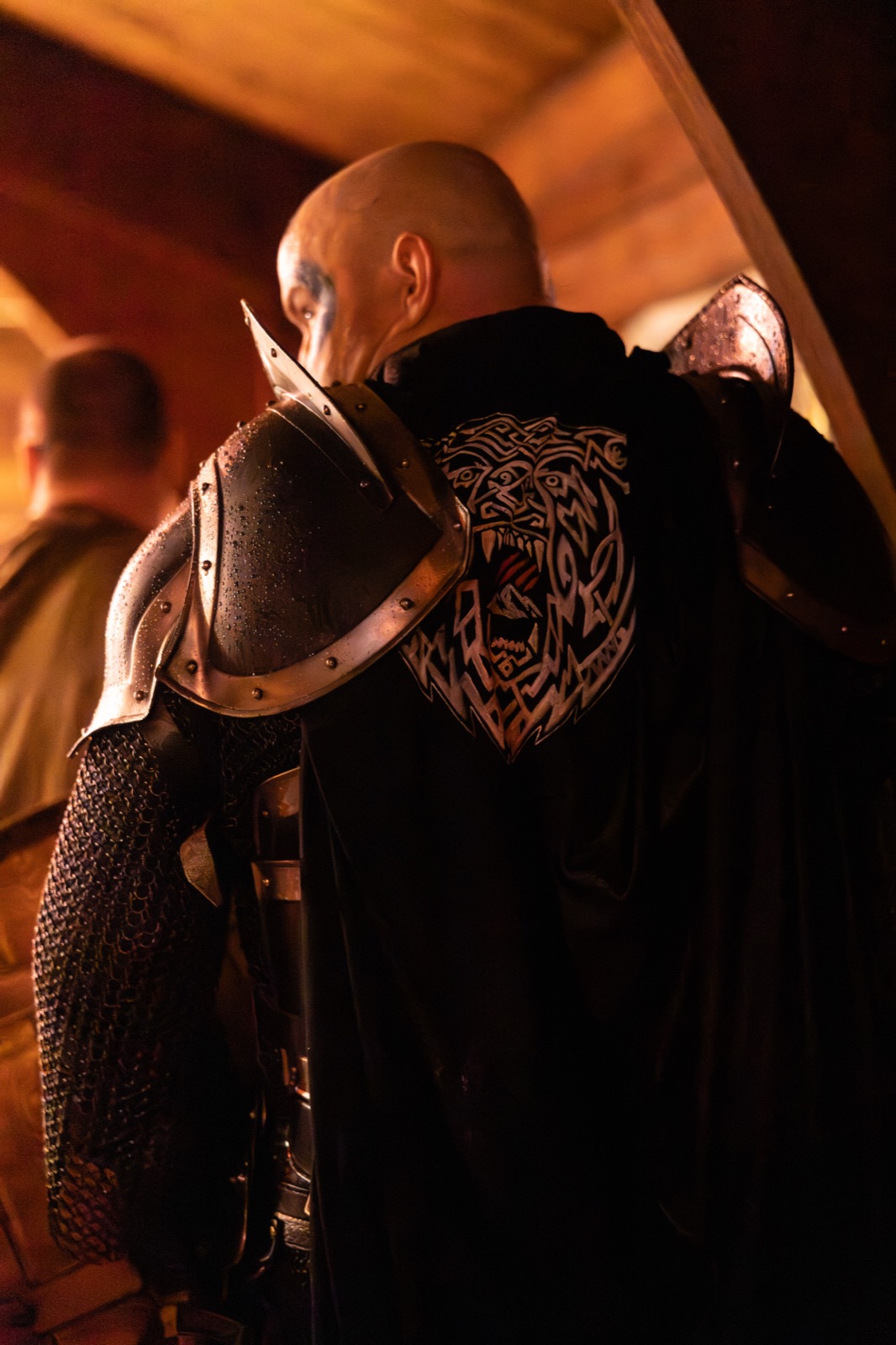
“Had they been willing to enjoy the fruits of their labor in peace and tranquility, the greatest and best part of the world was their own.”
The prologue referred readers to the History of the Annwyn, which is now on The Annwyn page. Its table of town buildings, its map, and its sections on travel, on entering the Annwyn, and on where characters could live are left out. The rest appears as it was written, with a few typing errors fixed. This prologue spells the town Mistvale, as older documents did.
Recent History
In the fourth moon of 766, explorers uncovered a long-buried ruin known as the Tower of Menethil, believed to be a relic of the lost Eldritch Age. Scholars and warriors alike braved its shifting halls, surviving the tower’s traps and puzzles to recover fragments of ancient knowledge. Though its full purpose remains unknown, the power housed within appears tied to an unfinished rite of immense consequence. Among the findings was a strange scroll written in an unknown hand—its script still resisting all translation.
Soon after, Mistvale fell under siege by monstrous beasts that carried a sickness resembling the old tales of moon-borne corruption. Those afflicted were twisted into creatures of fang and rage, bound to a violent will. Rumors spread of a hidden cult worshipping a being called the Mad Shepherd, and many began to whisper that the beasts and this new faith were one and the same.
Across the Annwyn, the Aurorym Saints met grim fates in quick succession. One by one they fell, only for whispers to follow that their spirits had not departed but instead found new vessels among the people of the Annwyn. Whether this is divine rebirth or heresy divides even the faithful. The church struggles to stand against the encroaching dark, and doubt gnaws at the hearts of the devout.
Meanwhile, the Godslayer movement swelled in number. Once dismissed as zealots, they have become a banner for frightened commonfolk seeking deliverance from the unnatural. No longer content with sermons and symbols, they now carry arms—supplied, it is said, by unseen noble patrons whose loyalties remain shadowed.
Then came the unthinkable. King Giles II himself arrived in the Annwyn, borne by the ships of his loyal captains, intent on restoring faith and crown alike. His visit began in triumph and ceremony yet ended in blood. Ambushed upon the road by his own guard turned traitor, the King was slain with a poisoned blade. His death revealed the hand of a secret order—zealots or assassins—working in the shadows to drive the realm toward chaos.
As grief and confusion spread, a traveling Cirque troupe arrived to entertain the weary people of Mistvale. Their performance dazzled the crowd, but behind the masks lurked something far older and more dangerous. When their illusions failed, the glamour was torn away and a terrible thing stepped forth—a construct of bone and spirit that brought death to the square before it was destroyed by the townsfolk’s courage and faith. Elsewhere that night, a small band from the town crossed into a shadowed realm of the dead, seeking what legends called the lost relics of the Nightwardens. Against all odds, they returned with five glowing reliquaries said to contain the spirits of those ancient heroes. Who among the living will bear them—and whether they can endure the oath that follows—remains to be seen.
Current Events
Civil War Has Come to the Annwyn: The War of the Dawn and Dusk
Following the King’s death, word found its way beyond the Mists of the Annwyn—and the realm unraveled. What began as whispered confusion soon became open war, as banners rose and oaths were broken both within and without the veil.
In Highcourt, the widowed Queen Aline Bannon named her young son Cyrus the rightful heir and took the title of Queen Regent. Loyal bannermen rallied quickly—House Blayne, the Bannon faithful, and those still sworn to the late King’s cause. At her command, Lord Alion Cornwall marched through the Mists with a host of soldiers and the Matriarch Thea of the Aurorym beside him, declaring their intent to reclaim the Annwyn for Faith and Crown. They named themselves the Dawnguard, raising their banners in Carran and rebuilding the old Stag Hall—now called Dawnbreaker—in honor of Saint Casilda. To them, Cyrus is the Dawnson, a child chosen by light itself to continue the line of Giles II. Their ranks are zealous, disciplined, and vast.
To the north, House Richter returned from its defeat at Gateway hardened and newly armed. Under General Vasha Hardinger, the Blackhammers swept through the Vale of Shadow, reclaiming the city and fortifying Ironhaven. Their lord, Hawken Richter, now claims blood-right to the throne through his mother’s line—a bold assertion backed by the largest standing force in the Annwyn. Those traveling south of Mistvale see their black banners stretching to the horizon. Within their ranks move the Godslayers, whose numbers have swelled from frightened mobs into trained, armored companies. Their faith is iron, and their hatred burns brighter than the forges they serve.
In the forests to the west, the Oban forces—once masters of the Vale—have fallen back to their holdfast at Goldleaf. There, they are joined by a man who calls himself Giles the Third, though most remember him as Roderick Wolf, the bastard of the late Giles I. Backed by House Innis and their mercenaries, he has proclaimed himself the Woodsworn King, swearing to restore the broken bloodline and grant Innis prominence should his crown be secured. His armies—smaller than his rivals—strike from the trees, harrying supply lines and vanishing into the deep green, a ghost of the old wars returned.
Farther south, the Aragons have stirred. Charles Bannon, long allied with their house, has declared himself the Dragon King, claiming descent from both serpent and sun. His forces, joined by Aragon banners, now hold ground between the Richters and the Vale. Their aims are cloaked in rumor; some say they come to keep peace, others to seize the heart of the Annwyn for themselves. Whispers also tell of envoys from the Twilight Empire, their intentions as opaque as the silk veils they wear.
Beyond the noble houses, Dawnhaven has suffered most. Sabotage, arson, and murder have left the faithful starving and afraid. Famine stalks the streets, and the once-bright hymns of the Aurorym have dimmed to fearful murmurs. Only the arrival of the Dawnguard and Matriarch Thea has steadied the city’s pulse. She rules now through a council of Aurons, nobles, and Vellatora captains, striving to rebuild amid ruin. Whether the city will recover—or merely survive the winter—remains uncertain.
House Rourke and House Hale remain uncommitted, their silence as dangerous as any sword. It is said the late King sought to grant Lady Swallowsong of Rourke favor and land before his death; whether that promise still holds, none can say. The Hales, newly arrived and cautious, command seasoned warriors whose allegiance could tip the balance. Lady Coldhill’s envoys have refused all offers so far, leaving friend and foe alike guessing at the Bear’s next move.
The Corveaux and their allies among the Falconers nurse their wounds from the fall of Gateway, their once-proud cavalry scattered and cut off from the south. Yet there is quiet purpose in their ranks—some unspoken design that keeps them biding their time rather than fading from the field entirely.
As the tenth moon of 766 wanes, the Annwyn stands on a knife’s edge. Mistvale—birthplace of miracles and graves alike—lies trapped between the banners of dawn, dusk, and the deep wood. To some it is cursed ground; to others, the fulcrum on which the fate of the Kingdom turns. No one doubts what comes next. The mists will part, and blood will follow.
Outside the Annwyn
Those arriving from outside the Annwyn may have heard the following whispers and tavern talk about the state of the Kingdom of Arnesse:
- Gateway has fallen to the Richters. The banners of the House of Iron now hang over its ruined walls, and the Corveaux and Innis defenders have been driven off—for now. Still, the flow of pilgrims, refugees, and opportunists into the Annwyn has not stopped. The Richters grow rich on the tolls they demand at the border, but smugglers and Mistwalkers have begun offering passage for a quieter fee. The Mistwalkers seem content to ferry anyone with coin, caring little for whose colors they wear. For all their might, the Richters do not yet control every road into the Mists.
- The summer’s fighting was worse than any seen in a generation. What began as a quarrel among Bannons has widened into a full civil war—one that now touches nearly every protectorate. The armies of Richter press hard on both the Blayne and Innis frontiers, while skirmishes rage across the Hearthlands, the Northern Marches, and the Dusklands. Only the Everfrost and Tarkath remain quiet, though traders there speak of shortages and unrest. Fields have gone unharvested, granaries stand half-empty, and many fear that this winter will be crueler than the last.
- Fear rules the countryside. With the King dead and the future uncertain, commonfolk call these the darkest days since the Eldritch Cataclysm. Many now blame the Aurorym for the Kingdom’s decline—saying that making it the faith of the realm angered powers better left sleeping. Chantries have been burned, aurons driven out, and nobles who champion the faith find themselves scorned by their own people. In some towns, witch-burnings have begun anew, and anyone suspected of speaking to unseen forces risks the pyre. The Godslayer creed, once a fringe belief of the Annwyn, now spreads openly—its old hatred of gods and miracles alike finding new ears in desperate hearts.
- Both House Hale and House Corveaux are on the march. For months they have guarded their borders and held council in silence, but scouts now ride along the frontier and soldiers muster in their keeps. No one yet knows which banners they will follow when the storm breaks, but all agree that when they move, the balance of power will shift.
- Law has become a memory. With the throne empty and no clear ruler to command it, justice now belongs to whoever claims it. Some towns cling to their local lords or reeves, others fall under the rule of whatever company of soldiers happens to be passing through. Bandits thrive, roads are unsafe, and villages pay “tribute” to whichever warlord arrives first. There are stories of would-be heroes trying to bring order, but most end up dead or corrupted before their work is done.
- Across Arnesse, a slow unraveling has begun. The Sovereignlands burn, the Hearthlands starve, and the Dusklands and Marches fill with refugees. Many now whisper that these are the end-times the priests once warned of, yet few turn to the faith for comfort. Instead, people speak of taking fate into their own hands, of local militias rising to defend their villages and towns against both noble and monster alike. Without a crowned monarch to unite them, the Kingdom of Arnesse is splintering—each valley and keep becoming its own small, desperate realm.